
Do your little ones have a hard time settling into playing sometimes? I know Mr. C does! Some days he just can’t seem to get his little two year old self engaged. One thing I’ve found that helps when he gets into one of those unfocused moods is defining a play space.
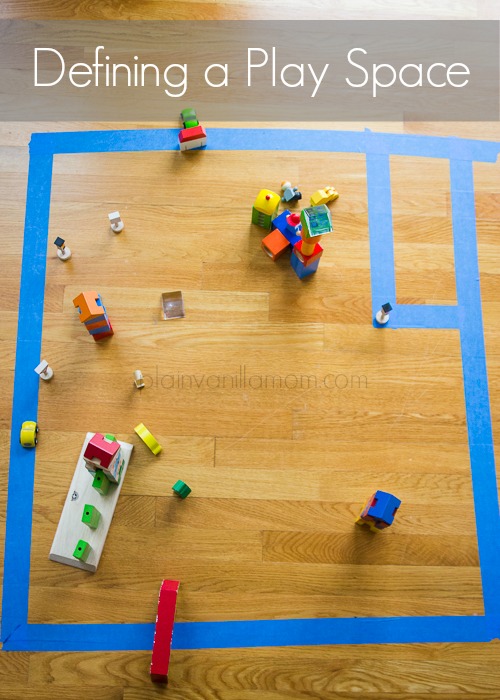
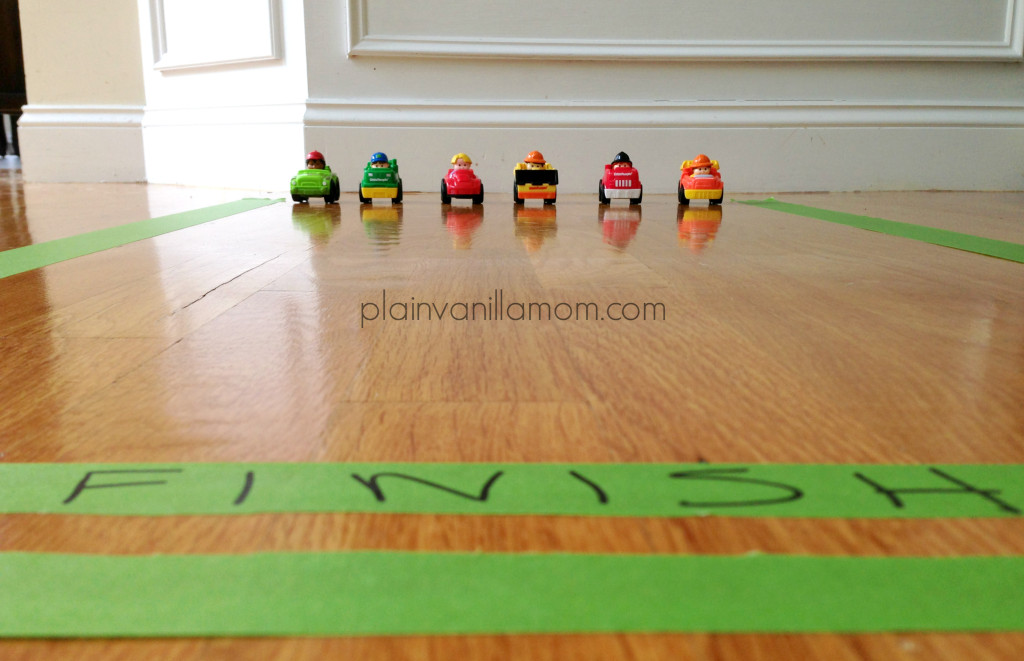
The most recent example I have of this is something we did just the other day. I used painters tape to tape out a square on our living room floor. I provided him with a few blocks and some cars and told him we were going to build a city. I really never did much more than tape off the square and put out a couple of blocks for him and he jumped right in and took it from there. He played and played in that taped off area for nearly an hour. I sat close by, helped when asked, and enjoyed playing some ball with Little E. The ironic part of this story is all those blocks and cars were sitting in the middle of our living room floor all morning, untouched, but as soon as I provided him with a defined space to play with them, he was totally engaged. 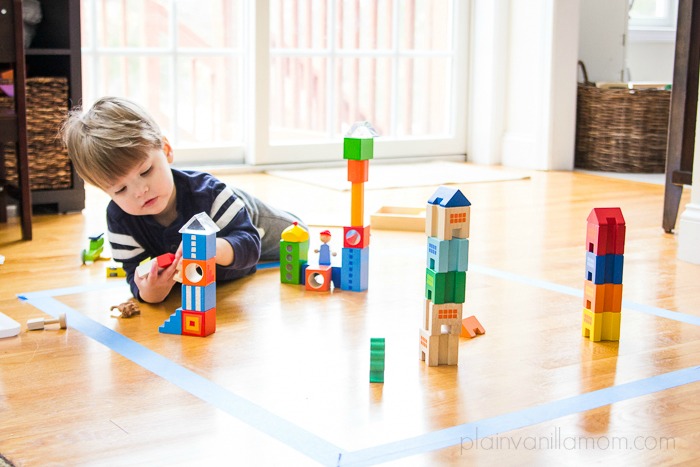 As I started thinking a little more about that experience I realized, that although not consciously, I do this often for C and this principle of defining a play space works for him over and over again. His most engaged independent play is often when I set him up with something to do AND a defined space to do it in. This invitation to race I made for him is another example of what I’m talking about. You can read more about it by clicking the link (above) or the image (below) but it’s the same idea. I provided him with a defined space to play and some materials to play with and it kept him focused and playing in one spot for an extended amount of time.
  Some more ideas for defining a play space:
- A blanket on the floor with a basket of books or puzzles like we did for our storybook picnic.
- A drop cloth on the floor for art work or messy play. I find this is key in keeping C in one spot when we are playing with a bin of rice, doing indoor water play, or painting. (You can read more about that here).
- A fort with toys brought inside. C is big into forts right now. They will keep him playing seemingly forever.
- A large piece of cardboard or poster board used as a base for building blocks or racing cars. I always have white poster board on hand so we’ll often just use that. Breaking down a large cardboard box works well too.
Tell me about how your little ones play? Do you ever define a play space for them like this? Do you also find that it can engage them for longer if you do?